

Story Highlights
- Fan-made maps and calculators have evolved from simple workarounds into companion tools.
- These tools solve design problems like opaque stat-scaling that developers often leave untouched.
- The second-screen habit of consulting a phone while playing has become a part of the player’s toolkit.
A player can stand in the middle of New Atlantis in Starfield, open the local map, and still find themselves reaching for their phone. Why? Because the truly useful version of that map isn’t in the game. It is sitting in a browser tab. Whether it is tracking down named vendors, logging mission starts, or checking off skill magazines, fans have consistently built better navigation tools than what Bethesda provided at launch.
This is not just a stopgap measure. Years after release, players still rely on sites like Map Genie because they offer a level of utility that the native interface simply lacks. What started as optional reference material has transformed. Today, build planners, inventory managers, and searchable databases remain open on a second monitor, receiving real-time updates around major game patches.
The Second Screen Solves A Design Problem
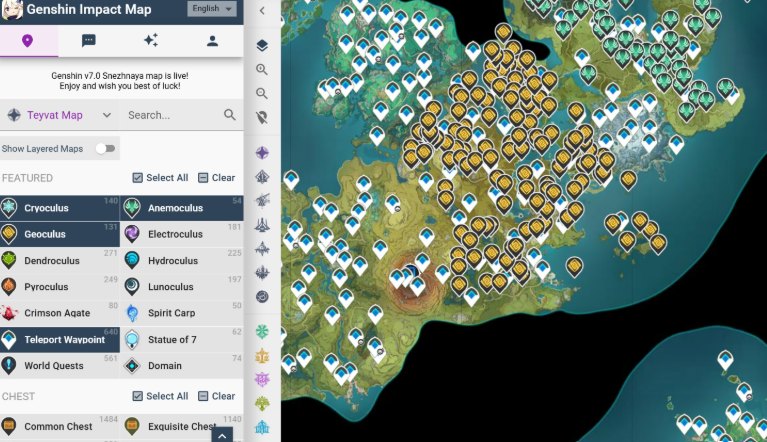
Big-budget games often deliberately withhold information. Discovery is a huge part of the genre’s appeal, and if every hidden room and collectible appeared on your HUD, the sense of exploration would vanish. However, some omissions are harder to justify. If an RPG shows you a skill’s base damage but hides how it scales, or a looter provides hundreds of storage slots with no way to compare them, players are left in the dark.
This is where fan-made gaming tools move in. A web page can do things that would feel clunky inside a controller-driven menu. It can filter through thirty different categories, accept a build code, compare two items side-by-side, or instantly recalculate a character’s stats based on a single gear change. The hard work lies in structuring that data and keeping it updated.
The line between a guide and the interface is blurring fast. You aren’t just reading about the game anymore; you are managing parts of your playthrough in another tab. Understanding how to present that data effectively is just as important as the data itself, much like learning how to visualize game scenes effectively when developing your own content.
Players Turn Shared Knowledge Into Software
The drive toward optimization is woven into the history of gaming. Long before modern databases, players were already documenting their journeys on graph paper beside dungeon crawlers or managing raid rosters in dense spreadsheets. While the medium has shifted to the browser, the core obsession remains the same: transforming raw play into structured, actionable data.
The process is iterative: a single user identifies an obscure mechanic, a second confirms the math, and a third crafts a polished, searchable calculator. When these fan-made gaming tools become indispensable to thousands, they transition from hobbies into high-stakes software that requires constant maintenance to stay compatible with the latest game patches and mobile standards.
A Useful Tool Needs A Front Door That Official Relationships Rarely Deliver
Many of these projects tend to start as a messy Google Sheet or a link buried in a Discord channel. That works for a small group, but public adoption demands more. Which patch version is supported? Is it secure? Can users report a bad map marker without needing a personal invite to the developer’s profile?
A clean landing page featuring version notes, credits, and contact info is vital. If you are at that stage of development, there are several publishing routes you can go for, ranging from no-code builders to WordPress. You don’t need a professional studio setup, but you do need clarity. A polished homepage can’t fix stale data, so ensure your front door clearly states the current game version.
I hope Bungie allows the modding community to thrive with this game
byu/TrainingEmergency711 indestiny2
Bungie remains the gold standard for how a publisher can recognize community work without absorbing it. Their companion directory features official apps alongside community staples like Destiny Item Manager and Braytech. This acknowledges that independent developers are often best suited to solve specific, narrow problems like weapon rolls or gear loadouts.
Nintendo has also stepped into this space with Zelda Notes for the Switch, acknowledging that the second-screen habit is here to stay. Whether it is an official app or a community tool, the goal is the same: reducing friction. And as gaming shifts toward more live-service models, this balance is becoming as important as the debate over why local and online co-op both matter for the health of a game’s community.
Patch Night Is The Real Test
A calculator can look perfect for months and become misleading the second a balance update shifts a few coefficients. Map markers are generally sturdier, but expansions and seasonal areas still require constant upkeep.
Ultimately, trust is built on ordinary, boring details. Are your formulas explained? Is there a way to send feedback? If you eventually add donations or subscriptions, are the free and paid functions clearly distinct? Most fan-made gaming tools begin with one person who was simply annoyed by a bad inventory screen.
Six months later, they are checking broken API calls and renamed items before they even get to play the new patch themselves. That dedication is exactly what keeps our favorite games playable long after the developers have moved on.
Thanks! Do share your feedback with us. ⚡
How can we make this post better? Your help would be appreciated. ✍






 Join Our Community