

Story Highlights
- Call of Duty posted footage of a representative serving a cease-and-desist to cheat seller Elocarry at an Ohio residence.
- Activision says it has disrupted more than 375 cheat reseller operations and served over 80 cease-and-desist demands.
- Elocarry has since paused sales of its Call of Duty and Warzone cheats, though the rest of its storefront remains active.
Call of Duty’s fight against cheaters just left the game entirely.
The Visit, On Camera
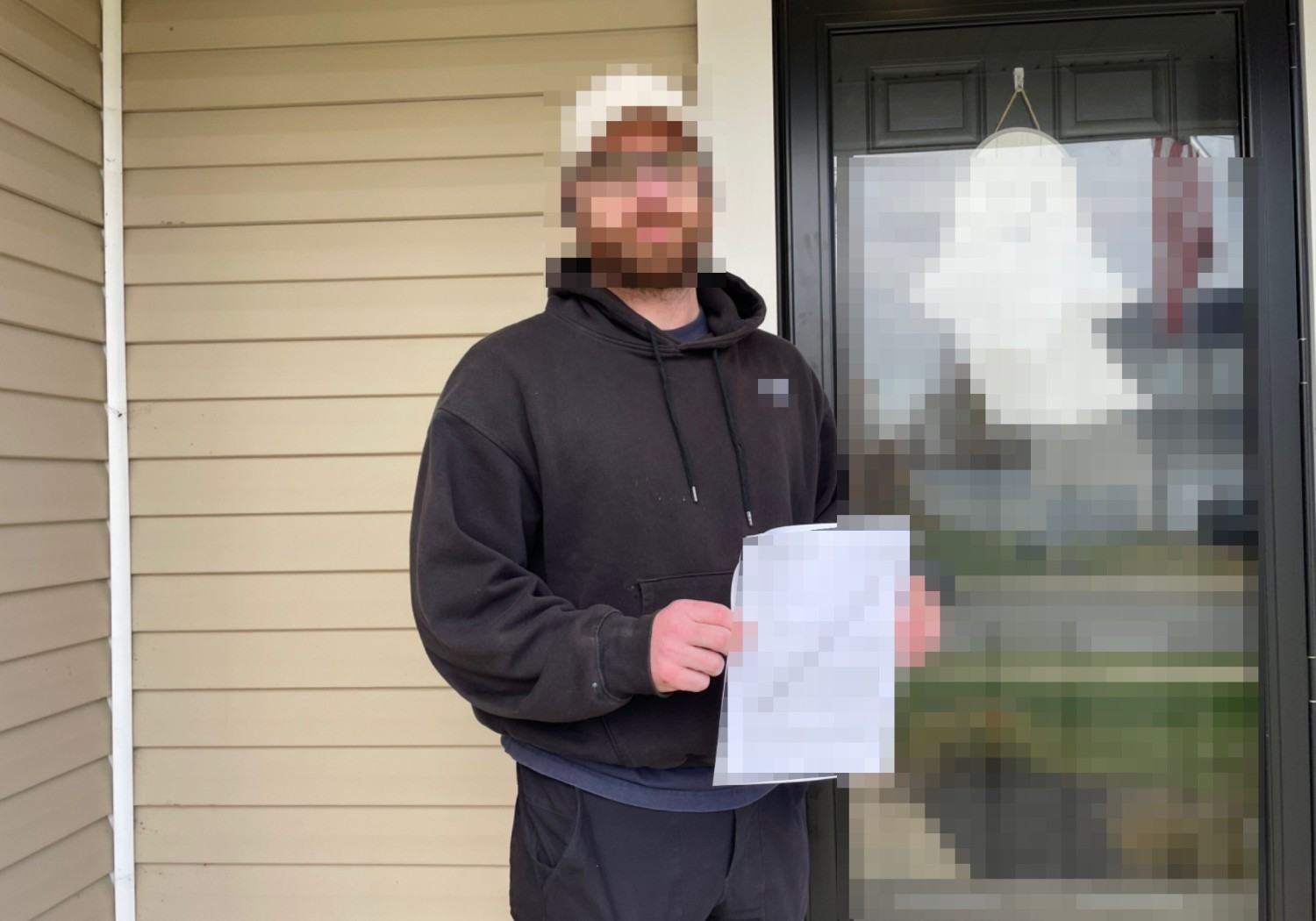
The clip, posted to the official Call of Duty account, is timestamped 9:50 AM on August 22, during last weekend’s Modern Warfare 4 Closed Beta. A representative is shown driving to a residence in Ohio, walking up to the front door, and meeting a man whose face is blurred throughout.
“What’s this?” the man asks. “Attorneys for Activision,” the representative replies, “and it’s a cease-and-desist order for you.” He tells the man to contact the attorney’s office listed on the paperwork, hands over the documents, and leaves. Activision has since clarified the document itself was technically a cease-and-desist demand rather than a court order, despite how the representative described it on camera.
Before the visit, Elocarry had been advertising a Black Ops 7 and Warzone cheat package built around an aimbot, ESP, a triggerbot, and controller support, marketed as “RICOCHET-safe” and streamproof with what it called kernel-grade evasion. Subscriptions reportedly ran as high as £79.99 for three months.
The Numbers Behind The Campaign
Call of Duty framed the Elocarry visit as one piece of a much bigger operation. In a follow-up post, the account laid out the scale of it:
- More than 375 cheat reseller operations disrupted
- Over 80 cease-and-desist demands served
- More than 30 vendors shut down entirely
The account added that litigation remains on the table where necessary, closing with a blunt warning aimed squarely at the people building and distributing cheats rather than the players using them: “Build cheats. Sell cheats. We will find you.”
A third post framed the strategy in plainer terms, describing the goal as going after the people and businesses profiting from cheating rather than just banning accounts in-game, calling it another way of making cheating harder for the sellers as much as the users.
Elocarry’s Response
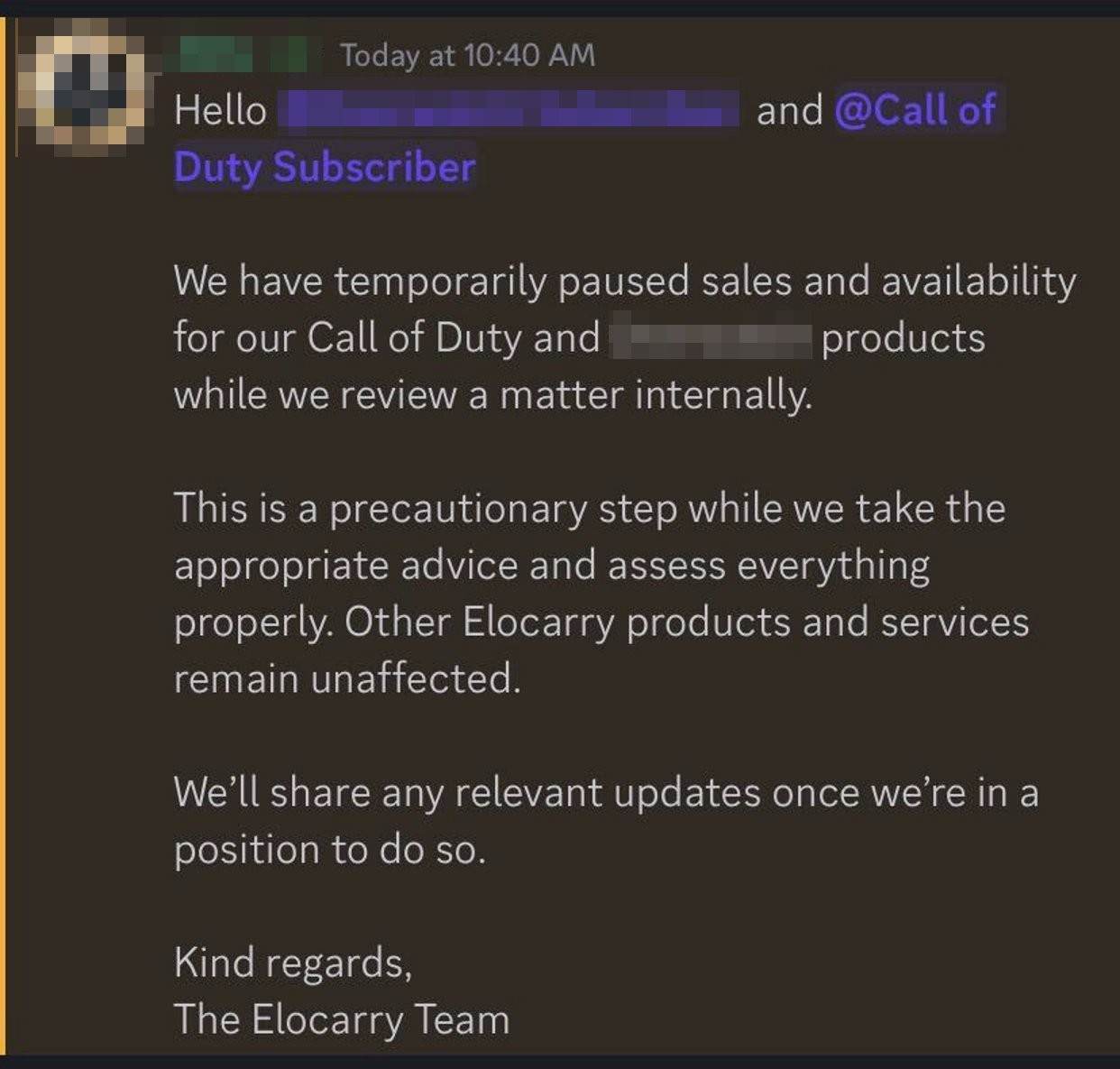
Elocarry addressed the takedown directly with its own customers. A Discord message shared by the seller, and reposted by Activision, told subscribers that sales and availability had been “temporarily paused” for its Call of Duty products while the matter is reviewed internally.
The message describes the pause as a precautionary step while it takes appropriate advice, and notes that its other products and services remain unaffected. Elocarry’s website backs that up. Call of Duty and Warzone cheats are no longer listed among the games it sells for, but the storefront is still live and continuing to offer cheats.
Call of Duty Modern Warfare 4 Launches On October 23, 2026
The takedown lands about two months before Modern Warfare 4 releases on October 23. Activision has leaned heavily on RICOCHET Anti-Cheat as a selling point for the game, and pairing that in-match detection with real-world legal pressure on cheat sellers is a shift in how visibly aggressive the publisher is willing to be about it. Whether the approach meaningfully slows down cheat sellers who mostly operate outside U.S. jurisdiction is still an open question, but Activision clearly wants players to see the effort happening in public.
Thanks! Do share your feedback with us. ⚡
How can we make this post better? Your help would be appreciated. ✍





 Join Our Community