

Story Highlights
- Early duo-lane swaps to top are turning 1v1 matchups into 2v2 and 3v3 skirmishes, gutting the value of counter-picks and mechanical skill.
- Riot’s repeated patches, from turret buffs to gold penalties, have only produced temporary relief as top teams keep finding workarounds.
- Fearless Draft compounds the problem, forcing top laners to abandon comfort tanks by game three and adapt on the fly.
The return of aggressive lane swaps to professional League of Legends has turned into a serious problem for the competitive scene, and it’s worth breaking down exactly why.
Destruction of Top Lane Duels And Loss Of Draft Value
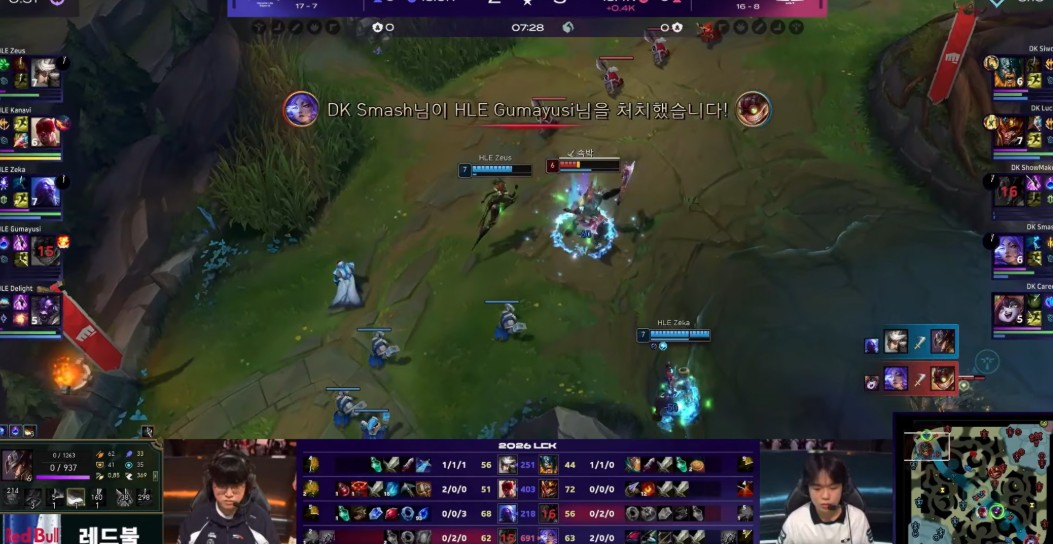
I regularly analyze top-tier league matches to assess how macro decisions impact the individual skill expression of top laners, and the pattern is hard to miss. Constant rotations of ADCs and supports to the top lane completely negate the traditional laning phase, turning skill-based matchups into a routine battle for survival under the turret. Because of this, top laners lose the ability to capitalize on counter-pick advantages, often finding themselves multiple levels behind by the five-minute mark.
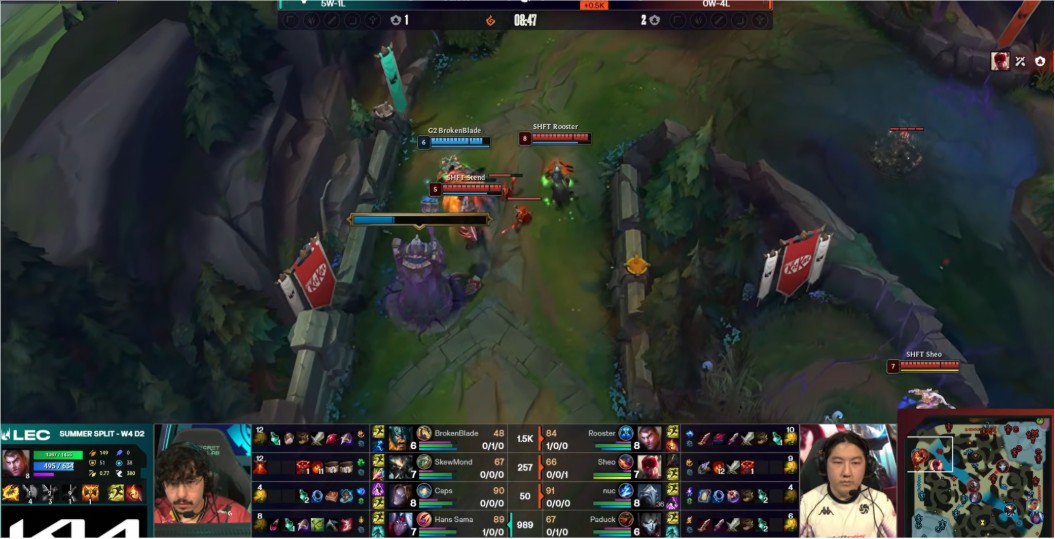
When a top laner is left in a one-versus-two situation, their primary task is reduced to not dying under a level two dive and grabbing at least a couple of creeps from a safe distance. Watching the current LEC summer split schedule, I’ve frequently noticed how teams like Karmine Corp or G2 Esports deliberately sacrifice their top laner’s farm for the sake of secure scaling on their ADC.
In this scenario, a player’s mechanical mastery on champions like Renekton or Jayce is practically nullified, since the early game outcome gets decided by the timing of the incoming support and jungler rather than micro-control.
Under these conditions, top laners like Oscarinin or BrokenBlade can’t afford their usual aggression and are forced to play with extreme caution, constantly reading the minimap and listening for team calls. Missing information about the enemy support’s absence almost always results in death, especially with the opposing jungler lurking nearby for a flank.
Instead of classic 1v1 duels, early top lane gameplay turns into chaotic 2v2 or 3v3 skirmishes involving junglers and roaming supports. That breaks draft strategy at its core: teams move away from fragile, skill-reliant duelists in favor of resilient tanks like Sion or Ornn, who can survive multi-man focus fire and still provide utility to the roster.
The Impact Of Lane Swaps On Champion Pools And The Fearless Draft Factor
Relying on durable champions seems like the obvious answer to early rotations, but in practice it’s far from a guaranteed win. Even if a pick like K’Sante or Ornn handles the incoming pressure relatively well, the team risks falling behind in mid-game damage output if the opposing carry on the other side of the map reaches critical gold thresholds first. As a result, coaching staffs are forced to balance pure survivability with hard engage tools, gradually phasing specialized split-pushers out of their strategies entirely.
The dynamic gets more complicated with the Fearless Draft system, which prevents teams from comfortably spamming the same picks across a long series. Once the core pool of frontline tanks is exhausted by game three, top laners have to adapt by pulling out bruisers like Renekton and Aatrox, or even situational pocket picks like Vayne or Gwen. The player then has to instantly adjust their build around resource deficits and play around the team, even when their champion was originally drafted for aggressive laning dominance.
That said, writing top laners off as merely secondary utility supports would be a mistake. If a team successfully counters a lane swap, or the player on a pick like Gwen or Vayne manages to secure early kills while escaping pressure, the momentum swings instantly. With an item and level advantage secured ahead of the curve, these hyper-carries can shred the opposing frontline solo and close out the game off a couple of decisive teamfights, turning the opponent’s entire early-game strategy to dust.
For a broader sense of which champions actually hold up under these conditions, eXputer’s Top Lane Tier List breaks down who’s thriving in the current meta.
Riot Keeps Patching, Pros Keep Finding Workarounds
Riot Games developers have repeatedly attempted to eradicate this strategy through artificial restrictions and anti-swap mechanics. From early iterations of swap-detection systems through the current 2026 season, including patch 26.16, balance designers have steadily tightened the rules: adding dynamic defensive buffs to turrets, cutting gold income for premature pushes in off-lanes, and tweaking initial Voidgrub spawn timers. Riot’s core objective has been clear: make moving the duo lane to top early economically unviable.
Yet even with the latest adjustments to turret resistances and plating defenses, professional rosters keep finding loopholes for specific matchups. Relying on these artificial band-aids only highlights the limits of numerical restrictions against deep macro-optimization from elite teams. Rather than organically rewarding traditional 1v1 duels, the game is forced to rely on strict timing windows that pro players actively find ways to bypass to protect their primary carries.
The Divide Between Solo Queue And The Professional Scene
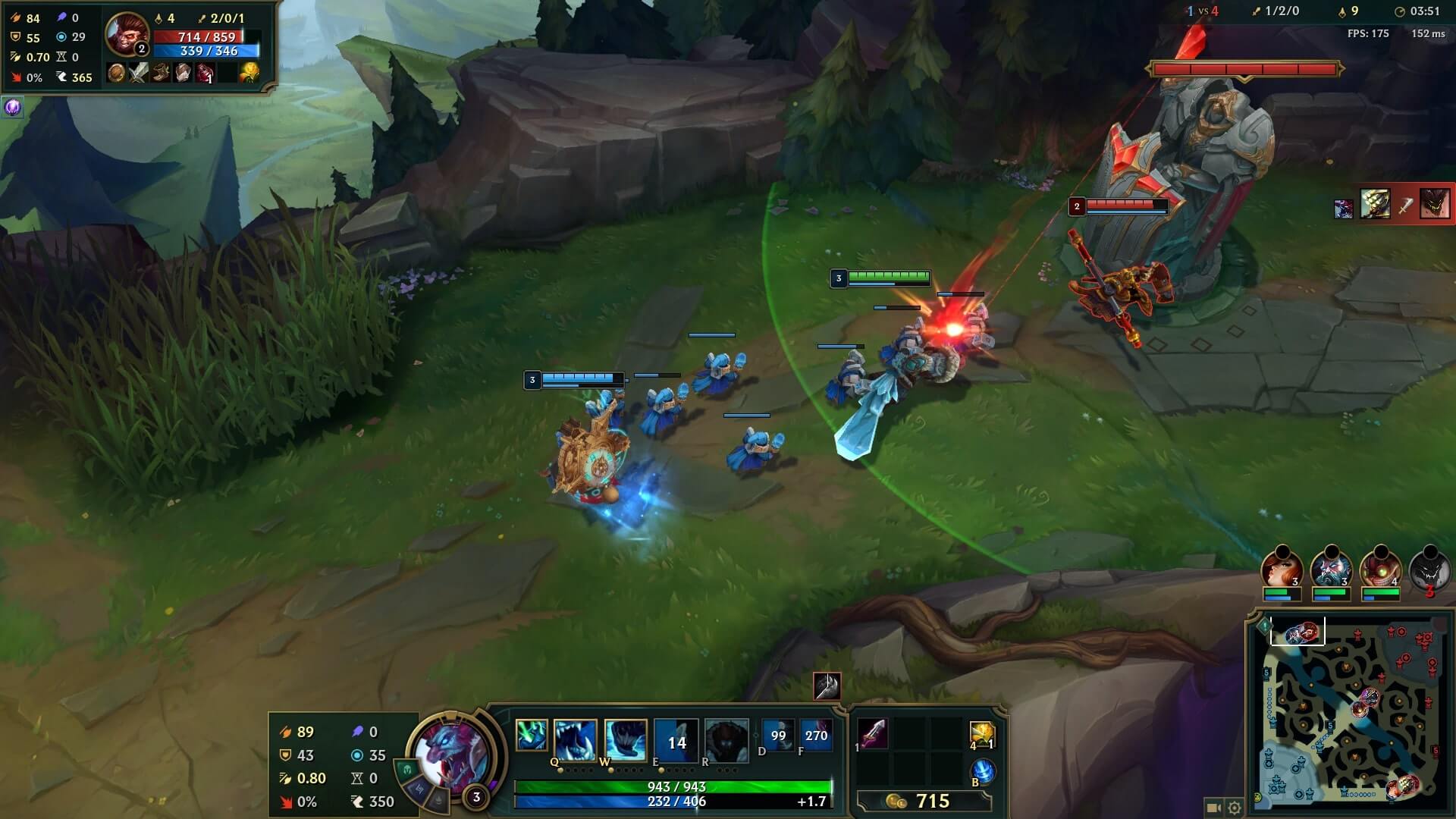
The core issue with the current state of the game lies in the massive divide between solo queue and professional tournaments. In standard ranked matchmaking, ordinary players never coordinate lane swaps, spending hundreds of games honing their standard 1v1 dueling mechanics. When esports athletes step onto the stage, they enter an entirely different environment where nuanced micro-matchup knowledge and individual skill get pushed aside by scripted team rotations.
Pro players have repeatedly highlighted in recent interviews that practice quality on the top lane has deteriorated significantly. Maintaining consistent competitive form becomes difficult when scrims and solo queue sessions revolve around wave management and crashing minion waves under the tower, only for stage games to deny any approach to the first wave of creeps at all. That creates a contradictory situation where the best duelists in the world can’t showcase their mechanical talent, and instead get forced into cookie-cutter survival scripts.
This growing disconnect between high-level competitive play and regular matchmaking also hurts the viewing experience for fans. It’s hard for an everyday player to relate to the action on stage when the decisions made by their favorite top laners bear zero resemblance to the reality of ranked queue. Once watching professional leagues stops serving as a way to learn fresh mechanics and champion-specific lane tricks, casual interest naturally starts to fade.
Conclusion
Early lane swaps have dealt a significant blow to the identity of the top lane in League of Legends. Riot’s attempts to balance the meta through severe turret penalties have provided only temporary relief. The competitive scene needs a fundamental return to the value of individual matchups. Only then will top laners regain their consistency, and viewers get the high-stakes, skill-driven duels they expect from the best solo players in the world.
Thanks! Do share your feedback with us. ⚡
How can we make this post better? Your help would be appreciated. ✍



 Join Our Community